
April’s here—and we’re calling for showers. Not the kind you step into, the kind we actually need: rain. Ironically, it’s coming down right now.
And speaking of rain, today’s thought is inspired by two of my favorite artists—on opposite ends of the spectrum: 50 Cent and Luke Combs.
“When it rains, it pours.”
What am I getting at? Habit stacking.
You get to choose what you stack—but once it starts, it builds fast. Ever notice how when one thing goes wrong, it feels like everything follows? That’s not random. One poor choice lowers the bar for the next one. And the next.
But the flip side is just as powerful.
One good choice makes the next one easier. Show up for a workout? It’s easier to eat better. Eat better? It’s easier to stay consistent. Momentum works both ways.
So how do you shut off the storm of bad decisions?
You interrupt it.
Make one good choice. Then stack another. And another.
Rinse. Repeat.
Member of the Month
Hilary Brewster
Hilary is a steady, consistent, hard-working athlete who usually comes to noon class. She not only juggles her law career but is also a mom, chasing her kids around, supporting them in sports, etc. We thought of Hilary not only for her abilities in CrossFit (she made quarterfinals, she’s pretty fit!) but just because she always is a pleasure to coach, comes in (even if she’s 2-5 min late 🤣), and still knocks out the workout with full effort.
Workouts
As we move from March into the beginning of April, we will wrap up some of this post-open 4-week block, which has included 1-2 days of more bodybuilding workouts. I have enjoyed these, and I hope you have too. It’s always a nice change of pace coming off 8 weeks of open prep workouts. The rest of April, you will see more of a 12-week dynamic effort block, where we are going to have one “true” dynamic effort day.
Educating the “Why”
I think it’s important for some of you to understand what we do—and more importantly, why we do it. There are a lot of directions we could go with that, because in CrossFit, we use a wide range of proven training methods. The question becomes: which ones are worth breaking down?
Some of you don’t really care—and that’s fine. But for those of you who have ever caught yourself thinking, “Why are we doing this?”—this is for you.
Let’s start with something you see often:
The Maximal Effort Method (Max Effort Days)
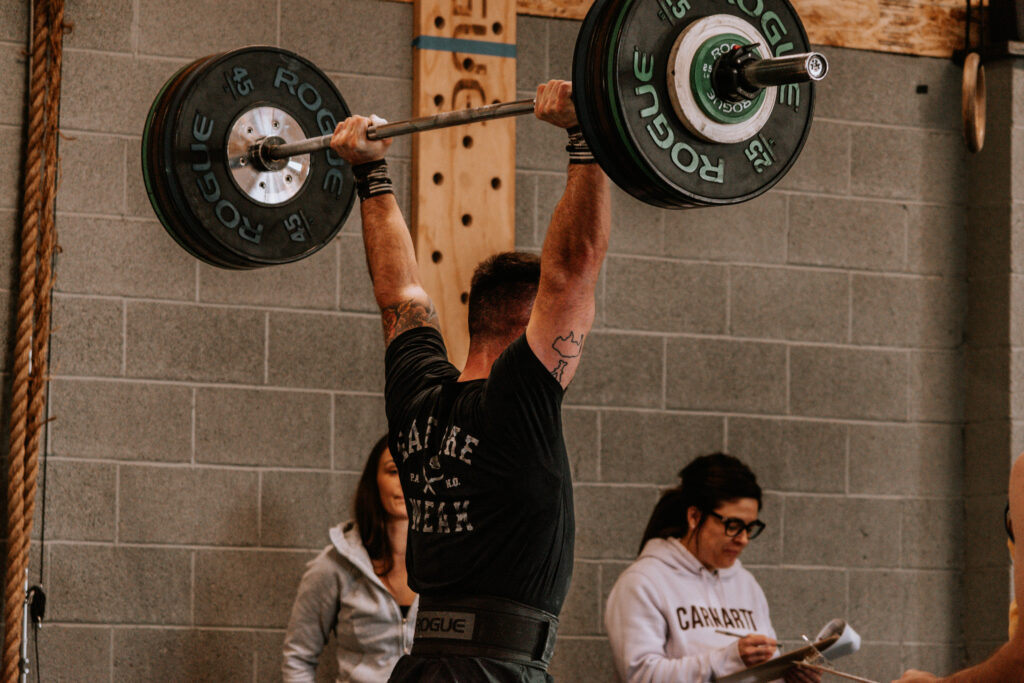
These are the days when we’re working up to a heavy load for 1–5 reps. This method is one of the most effective ways to build absolute strength—and it’s also one of the most popular. The energy is high, people are pushing themselves, and yeah… everyone likes chasing big numbers.
One of the reasons we can program max effort days consistently is that we rotate the lifts. We’re not maxing out the same movement week after week. That variation helps reduce the risk of injury, prevents overtraining, and keeps progress moving forward.
“But isn’t maxing out every week dangerous?”
Not inherently.
What makes it dangerous isn’t the method—it’s how it’s applied. That comes down to both the coach and the athlete. One of my favorite quotes is “You think lifting weights is dangerous, try being weak. Being weak is dangerous.”
Max effort work is based on your capacity for that day. Unlike percentage-based training—where you might feel forced to hit a specific number—this approach allows for auto-regulation. Some days you’re on, some days you’re not. That’s built into the system.
Because we rotate exercises, stop short of failure, and use training maxes, there’s a strong argument that this approach is actually safer. We’re talking about 1–5 very intentional reps—not high-fatigue sets where form starts to break down.
On top of that:
- You’ve got multiple spotters when needed
- Coaches are watching closely and stepping in early
- We’d rather leave a little in the tank than force a risky rep
- Max effort days are spaced out to allow proper CNS recovery
And it’s not just about barbells…
Max effort isn’t limited to heavy lifts.
A set of max-rep strict pull-ups? That’s max effort.
A 50-cal bike sprint for time? That’s max effort.
Different movements—same principle: high intensity, full output.
Where this really becomes valuable…
Max effort work exposes the truth.
It shows coaches and athletes exactly where the weak links are—whether it’s a positional breakdown, a sticking point in a lift, or a limitation in strength or control. You can’t hide under heavy load.
And that’s where the real progress happens.
Because once we identify those weak spots, we can attack them directly. That’s where accessory work comes in—but we’ll save that conversation for the next one.
At the end of the day, it’s not just about lifting heavy—it’s about training with intent, learning where you’re limited, and building a smarter path forward.